.png)
If there's any industry ripe for autonomy, it's construction. The sector represents 13% of global GDP and underpins everything from housing and energy infrastructure to data centres and semiconductor manufacturing. Yet productivity has flatlined for a decade and labour shortages continue to worsen. Gravis Robotics is building the autonomy stack for earthmoving equipment, turning excavators and other heavy machines into autonomous robots in some of the world’s most complex environments. In conversation with IQ Capital partners Archie Muirhead and Jonno Evans, founder and CEO Ryan Luke Johns explains why autonomy is finally arriving on construction sites and what it could unlock for the global economy.
What are you building, and why now?
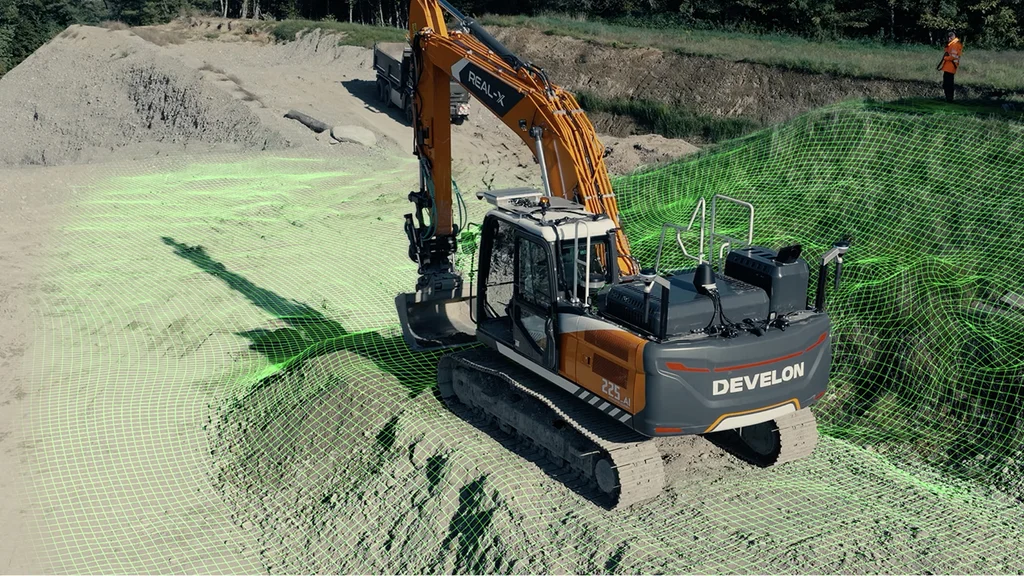
We're building autonomy for heavy construction equipment, starting with excavators. Our technology enables heavy machines to operate autonomously while still working seamlessly alongside human operators.
There are three major forces that are coming together at the same time. First, construction demand is accelerating globally. Everything from housing and transport infrastructure to renewable energy and infrastructure projects requires large-scale earthmoving. Take data centres. The race to deploy AI infrastructure means bringing a site online even a few months earlier can be worth millions or even billions of pounds.
Second, the industry faces a growing labour shortage. Productivity has remained largely flat while demand continues to rise, and around 40% of the workforce is approaching retirement. In many markets, including the US, there are simply not enough skilled operators of earthmoving equipment available to meet demand.
Third, the technology has finally caught up. Advances in sensors, edge computing and machine learning mean autonomy can now be deployed reliably on real jobsites rather than controlled demonstrations.
What did you see that others missed?
Most autonomy companies, certainly in the early days, looked to copy the autonomy tech found in mining or self-driving cars. That works for predictable jobs, for example, when haul trucks are driving the same route back and forth, but construction is fundamentally different. Machines need to understand how to interact with materials, terrain and environments that change continuously throughout the day.
We believed early on that construction would require a different approach. Rather than building a system designed only for fully autonomous operation, we built a platform that can operate across a spectrum, from operator assistance through to full autonomy, depending on the task, customer and environment. This flexibility has allowed us to deploy in a much wider range of real-world environments while continuing to improve the underlying models too.
What fundamental breakthrough or shift made this possible?
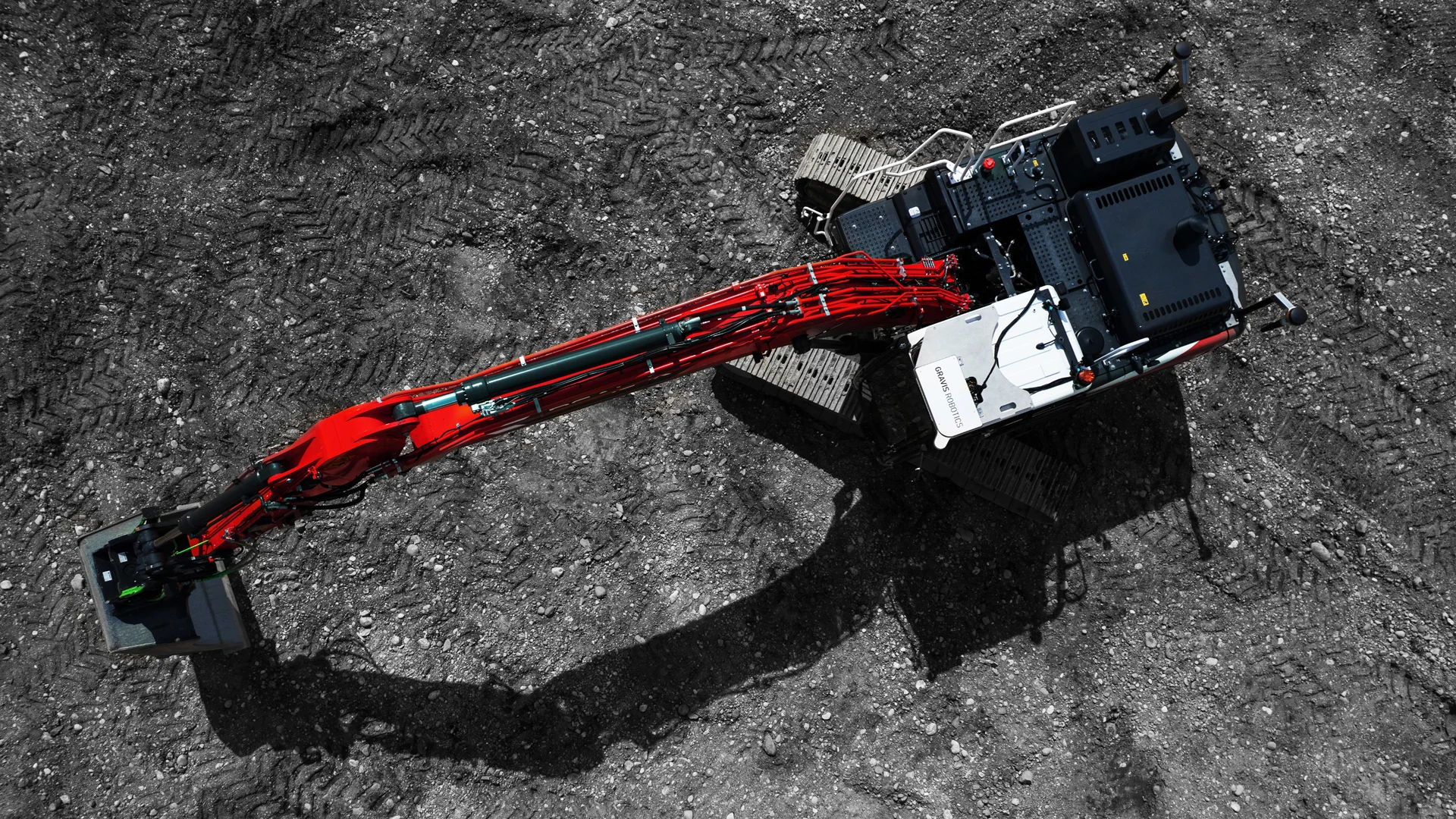
At the core of our platform is a learning-based control system designed specifically for hydraulic machinery. Our system combines LiDAR, cameras, GNSS positioning and hydraulic sensor data to create a real-time understanding of both the machine and its environment. The AI learns how different machines behave, how different soils respond and how excavation tasks should be executed. We often describe it as the machine learning to "feel the soil".
Experienced operators can sense changes in ground conditions through the machine itself. Our models learn from the same signals, using hydraulic pressures, bucket position and machine behaviour to adapt in real time as conditions change.
What needs to go right for this to work at scale?
The foundational control layer needs to work across a broad range of machines, manufacturers and operating environments. Construction equipment is highly fragmented and hydraulic systems change over time, so the technology has to be robust enough to adapt across all of those variables. Expanding internationally has given us exposure to a huge diversity of environments, from Europe and North America to Latin America and Asia, enabling us to continue learning from deployments in the field.
The productivity gains we're seeing today give us confidence in that approach. On one quarry site, our system delivered productivity that was 33% above target. On a pipeline project in Argentina, we achieved a 23% productivity improvement against a manual benchmark across almost two kilometres of side-by-side comparison.
How does the world change if you succeed?
The need for infrastructure is growing rapidly, but the industry's ability to deliver it is becoming increasingly constrained. Every major industrial project begins with earthmoving, whether it is a housing development, a renewable energy site, a semiconductor factory or a new data centre.
Increasing the productivity of construction equipment effectively increases a society's capacity to build. It shortens timelines, reduces bottlenecks and accelerates the delivery of the physical infrastructure that underpins economic growth and technological progress.
We see Gravis as operating at that foundational layer. Increasing productivity expands the capacity of societies to build critical infrastructure and accelerates the development of the systems that underpin economic growth.
Why are you the team to solve this?
I studied architecture and robotics, focusing on how robots and humans interact with the built environment and my co-founder, Dominic Jud, is a leading researcher in autonomous hydraulic systems. We met in Marco Hutter's Robotics Systems Lab at ETH Zurich.
Members of our founding team won the DARPA Subterranean Challenge, widely regarded as one of the toughest real-world robotics competitions ever created. The challenge required robots to operate autonomously in highly unpredictable environments where traditional robotic approaches often struggle, which shaped how we think about autonomy in challenging environments.
What does the next 12 to 24 months unlock?
We're moving from early deployment to industrial scale. We're already live with several major manufacturers, scaling manufacturing, formalising partnerships, and proving our subscription and lease models work.
Our focus is on making autonomy accessible to as many construction companies as possible, while continuing to demonstrate measurable gains in productivity, safety and operational performance. Through this, we want to make autonomous earthmoving a standard part of how infrastructure gets built.





.png)

